
Phocuswright Research Roundup 1Q26
The changes powering travel’s next phase


Across a diverse set of first-quarter research, Phocuswright examined the forces reshaping travel from the consumer to the core of the industry. Consumer trend reports reveal a more nuanced traveler, balancing indulgence with value, redefining loyalty and rapidly adopting AI as part of the discovery and booking journey. Market analyses highlight the continued expansion of experiences and evolving distribution landscapes, alongside detailed looks at agency dynamics. At the same time, research into AI, innovation and emerging technologies underscores how automation and intelligence are accelerating change across the travel ecosystem. Regional deep dives in Asia-Pacific, Indonesia and Vietnam further ground these shifts in local market realities, while ongoing metrics tracking keeps a pulse on performance and momentum across the industry.
This roundup offers a smarter path through that work, spotlighting the insights that explain what is changing, why it matters and how the industry is responding.
Here's a recap of the insights, data and more. (Click on each report title to access the report).
Consumer trends and behavior



Travel Loyalty in 2026: What Consumers Want, What Brands Deliver


In this report series:
- Beyond Points: Rethinking Loyalty and Brand Consistency in Travel
- Playing Favorites: What Makes a Go-To Brand in Travel, and Why Do Customers Stray
- Getting With the Program: Membership, Usage and Perceptions of Travel Loyalty Schemes
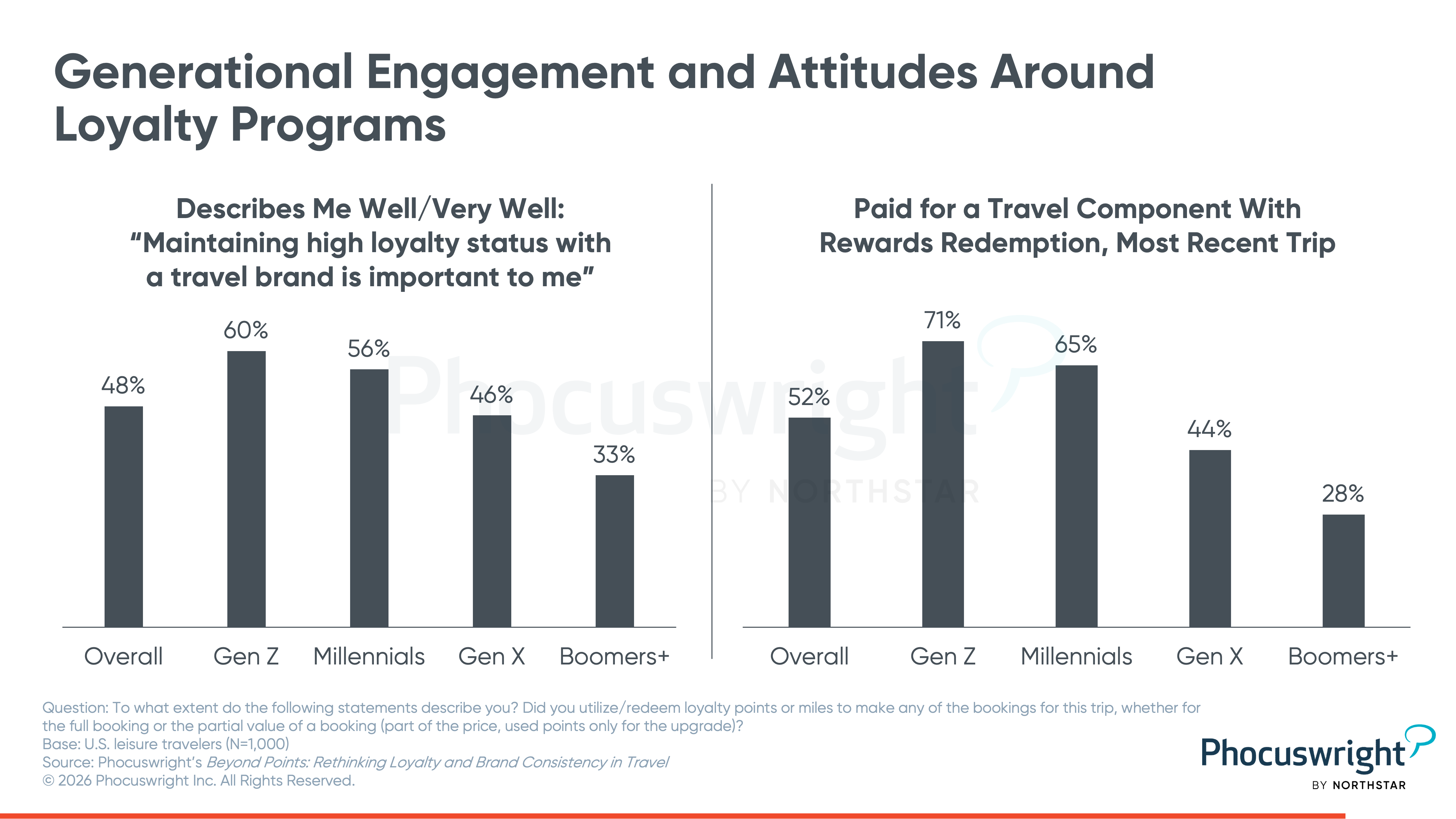
Travel loyalty is at a crossroads, shaped by more choice, more programs and growing misalignment between what travelers value and how brands reward them. Drawing on a comprehensive survey of U.S. leisure travelers, this three-part research series examines how loyalty programs are used and perceived, what truly drives repeat behavior and why even “loyal” customers so often stray. Across generations, value, trust and consistency matter, but flexibility, novelty and price frequently outweigh allegiance, challenging traditional points-based models. Together, the findings reveal why loyalty today is less about locking customers in—and more about earning relevance every trip.
Key questions answered by this report series include:
- Which types of travel loyalty programs attract the most members and redemptions?
- How can travel brands convert heavy program use into lasting customer loyalty?
- How do travelers define loyalty—and how does this differ from how brands structure loyalty programs?
- What kinds of generational differences exist in brand consistency, loyalty engagement and redemption habits?
- Why do travelers stray from their go-to brands, and how does novelty factor in?
- How do loyalty drivers and perceptions of value differ across generations?
- What are the top frustrations and “gaming” behaviors among loyalty members?
Free Research Insights articles:
The AI Surge: Travel's Fastest Behavioral Shift in a Decade


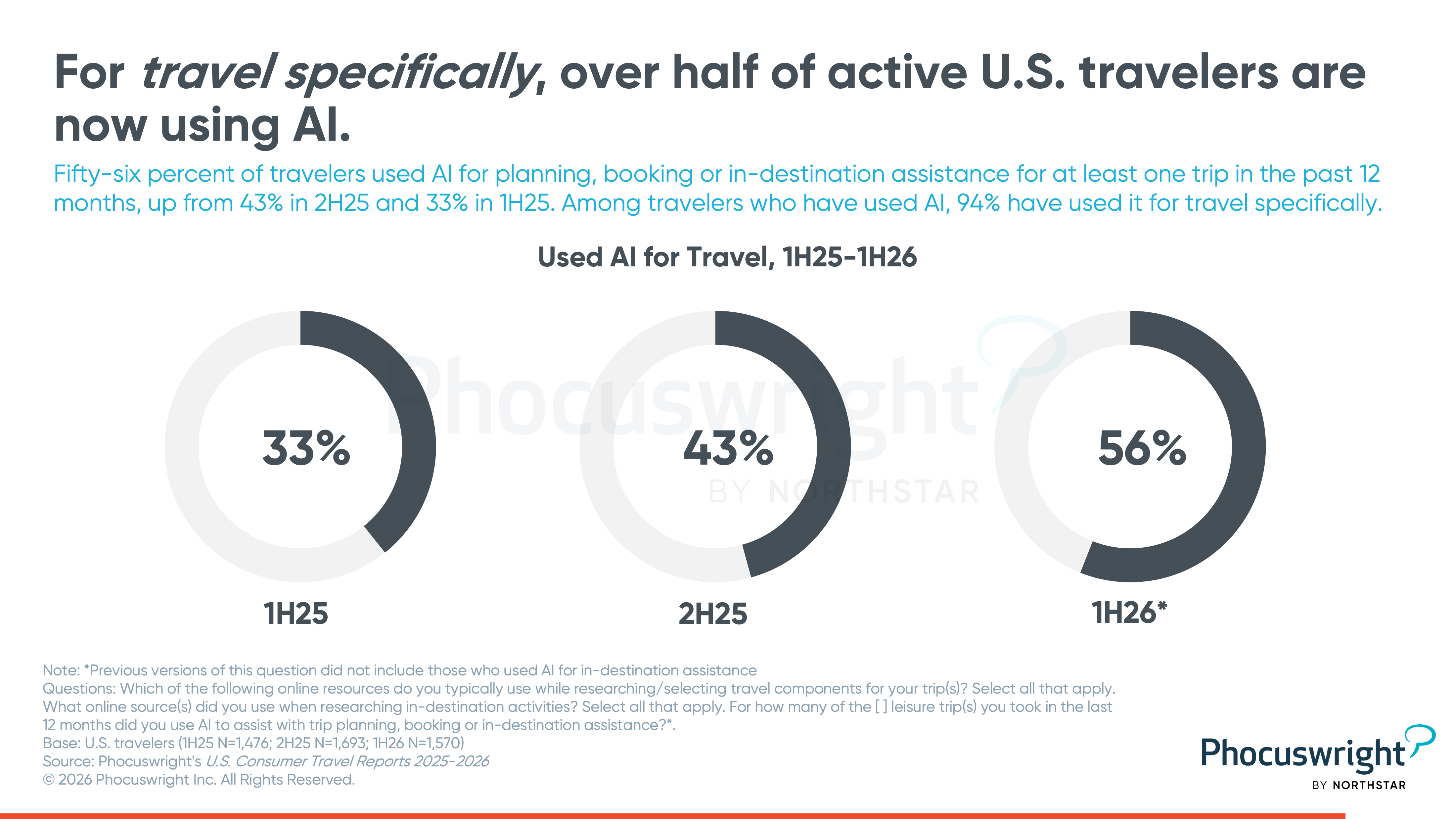
AI has cleared the majority mark in U.S. leisure travel: 56% of travelers report using it for travel, signaling a shift from novelty to default planning behavior. Gen AI is becoming a major discovery starting point, but it still tends to send travelers onward rather than replace other sources.
That momentum is running into a trust gap. A minority say they place significant trust in AI-generated results, even as many users report it boosts confidence and saves time. For the U.S. traveler, the next phase is less about “more AI” and more about better context and smoother paths from answers to booking.
Phocuswright’s The AI Surge: Travel's Fastest Behavioral Shift in a Decade is part of a comprehensive consumer research study examining how U.S. travelers integrate generative AI into trip planning and booking. This report primarily examines the impact of AI on search, trip decision and spend behaviors, along with what future expectations for AI in travel look like.
Key questions addressed include:
- How quickly has AI-for-travel adoption grown, and how does 1H26 compare with 2H25 and 2024?
- Are gen AI platforms replacing search or mostly driving click-through and follow-on research?
- Which generations are leading AI usage, and how fast are other cohorts catching up?
- Where are travelers encountering AI across the trip funnel (standalone tools, search, OTAs, maps and more)?
- What do travelers now expect from travel brands on-site, and how close is the industry to meeting those expectations?
Free Research Insights article:

Global Traveler Trends 2026


Improved and expanded for 2026, Phocuswright’s consumer travel reporting is taking center stage. Following a year of highlighting topical U.S. traveler trends, Phocuswright’s Global Traveler Trends 2026 expands coverage to all of our consumer-reporting markets.
Throughout the year, Phocuswright fields online consumer surveys, targeting online adult populations who travel for leisure. Research will spotlight key consumer segments and emerging trends shaping these travel markets. Topics will span technology adoption, booking behavior, sentiment toward leisure travel—and more!
Quiet Luxury in Motion: The Indulgent Explorer Mindset
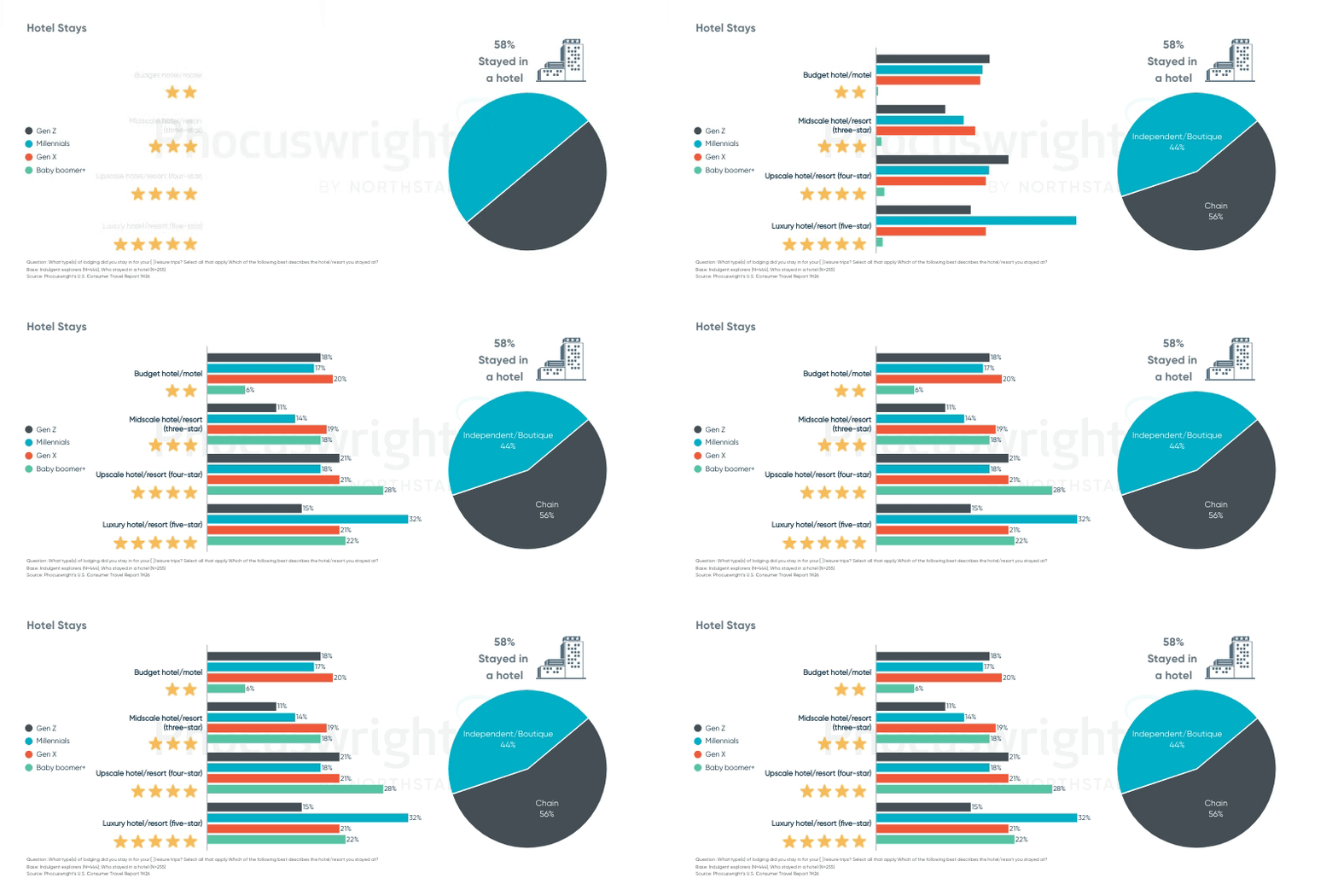
Luxury isn’t defined by a five-star label or a first-class seat—it’s defined by repeat behavior, selective splurging and a clear sense of what feels “worth it.” This profile, the indulgent explorer, represents high-value segment whose premium spending is driven as much by priorities and trade-offs as by affluence. They seek novelty, distinctive settings and experiences that feel hard to replicate, while still balancing destination appeal with what they will actually do once they arrive.
Phocuswright’s Quiet Luxury in Motion: The Indulgent Explorer Mindset is part of a comprehensive consumer research study examining what ultimately defines value for this high-spend segment and what their key priorities and pain points look like. The opportunity for travel brands to deliver premium is vast, if they can properly balance service, provide sufficient novelty and respect privacy boundaries.
Key questions addressed include:
- Who are indulgent explorers, and what distinguishes them as a behavioral segment beyond traditional affluence and demographics?
- How do indulgent explorers find trip inspiration and make decisions—and how do these patterns shift by age and wealth?
- How do they assemble trips (packages vs. DIY), and which channels (OTAs, advisors, suppliers) play the biggest roles across subsegments?
- What signals “premium” in their actual trip choices (lodging, air, ground transportation), and where do they make trade-offs?
- What does “luxury” mean to them in practice—including non-negotiables, what makes a trip worth the price and what breaks the experience?
Free Research Insights article:
Market segments

The Outlook for Travel Experiences 2019–2029


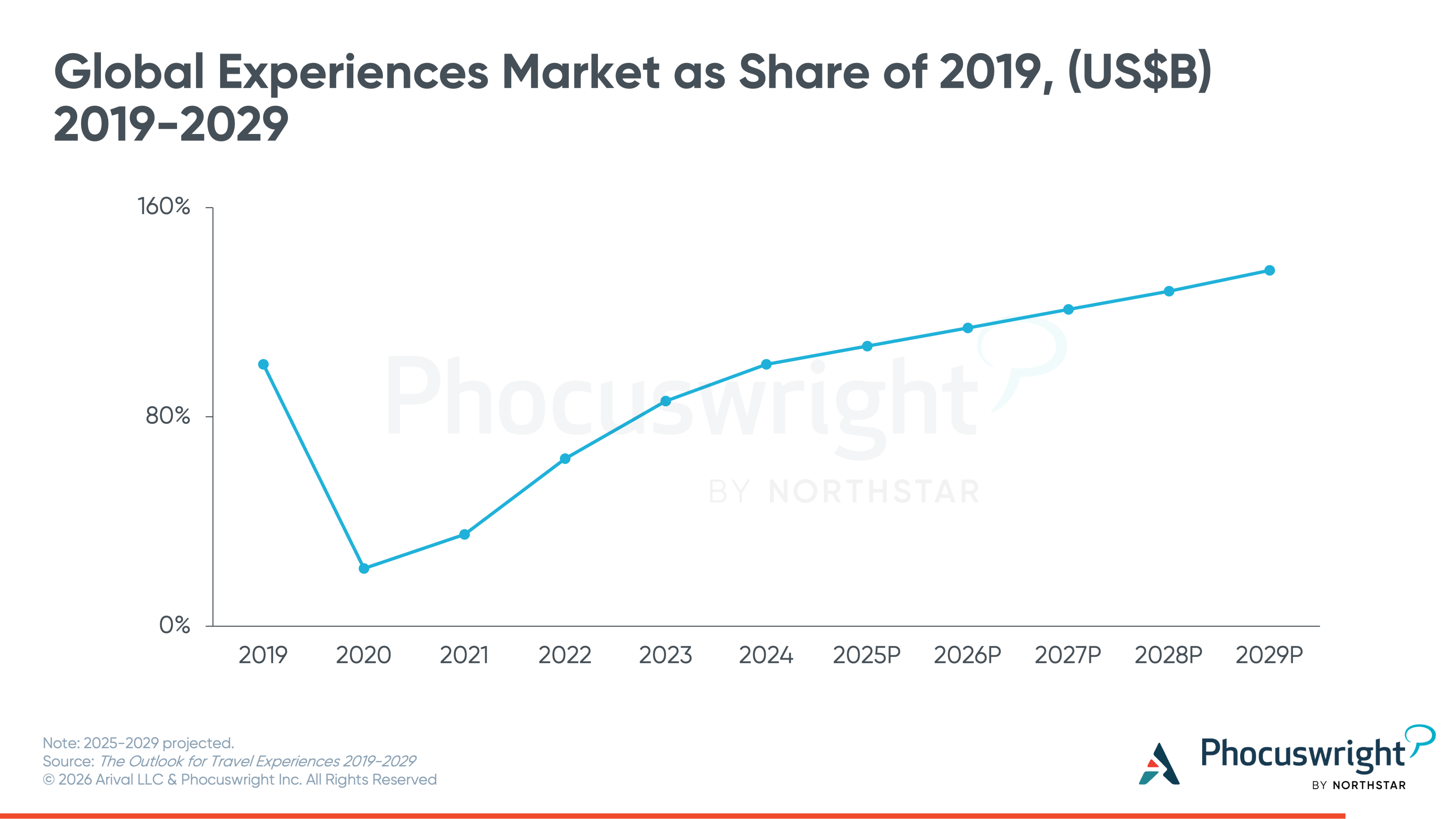
Experiences have long been called travel’s “next big opportunity.” A decade later, the sector is no longer emerging—it is expanding. After absorbing a deeper pandemic shock than any other major travel segment, tours, activities and attractions have rebounded, surpassed pre-COVID levels and are now outpacing the broader travel industry.
The Outlook for Travel Experiences 2019–2029, produced jointly by Phocuswright and Arival, sizes and forecasts the global experiences market through 2029, examining growth by region, category and distribution channel. Overall, the $271 billion strong sector is projected to exceed $340 billion by 2029, driven by rising per-trip spend, Asia’s acceleration and steady gains in online distribution. The next phase of growth will depend not only on demand, but on whether operators and platforms can use technology to convert complexity into durable, profitable infrastructure.
Learn more about our research partner at Arival.Travel.
Key questions addressed by this report include:
- How is the global experiences sector evolving from recovery to sustained expansion?
- Which regions and categories are gaining momentum, and what structural forces are reshaping demand?
- How quickly is distribution shifting online, and what does that mean for operators, OTAs and direct channels?
- What operational and economic challenges continue to limit scale and profitability in this fragmented market?
- How will technology — including AI-driven discovery, dynamic pricing and agent-enabled commerce — influence the future structure of distribution and marketplace power?
Free research insights article:
Canada Travel Agency Landscape 2026


Canada Travel Agency Highlights 2026 is a curated research report focusing on the Canadian travel agency distribution landscape. This year's findings are presented in interactive chart format.
Based on a comprehensive survey of Canadian travel advisors, questions answered include:
What factors do Canadian travel advisors view as most impactful for their business growth and client relationships?
What are the primary revenue streams and booking channels for Canadian travel agencies?
How do agencies attract and retain clients, and what marketing strategies are most effective?
What challenges and opportunities are shaping the future of Canadian travel agencies?
What impact, if any, does generative AI have on the segment now, and looking forward?
Free research insights article:
Tech and AI

Chinese OTAs Deploy AI for Big Global Push


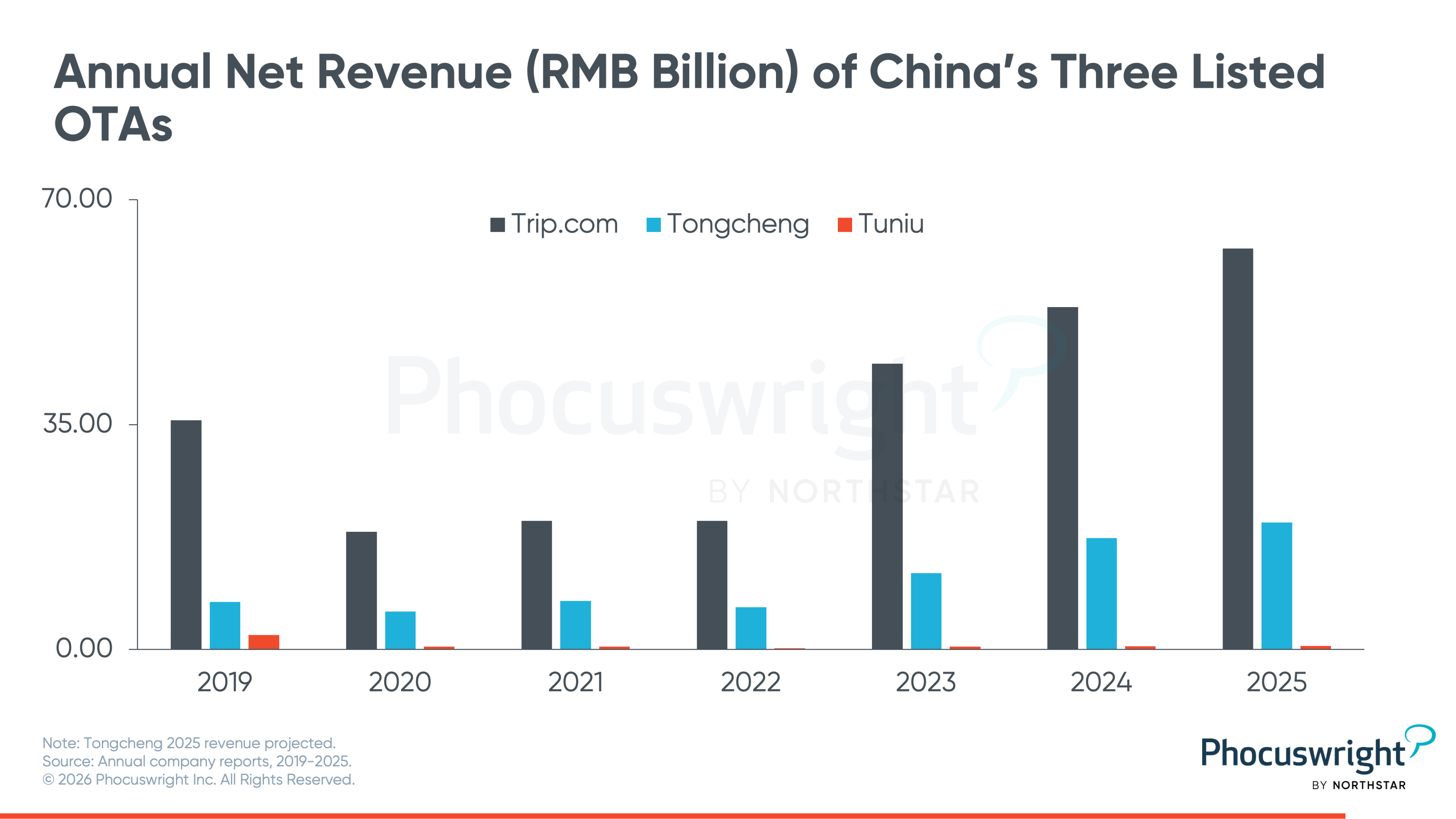
China’s OTA wars have always been intense. Now they’re getting a new accelerant: AI that doesn’t just recommend trips, but reshapes how travelers search, decide, book and pay—often without a traditional “search box” at all. Major Chinese intermediaries are pairing a protected home market and fierce domestic competition with a more disciplined global expansion strategy, while inbound travel policy shifts add a third growth pillar alongside domestic and outbound. The result is a fast-evolving distribution landscape where OTAs, superapps, payments players and social platforms are converging on the same prize: owning the traveler interface.
As AI trip-planning tools evolve toward agentic, conversational commerce, Chinese platforms are positioning to export their mobile-first hegemons—content, payments, partnerships and now AI-driven booking—into APAC first, then selectively into other regions. Chinese OTAs Deploy AI for Big Global Push traces how major Chinese players are turning these ideas into reality. Key questions answered by this research article include:
- How are Chinese OTAs balancing global expansion ambitions with a more disciplined, policy-aware approach?
- What is changing in China’s travel demand mix as domestic, outbound and inbound increasingly intersect—and why does inbound matter economically for OTAs?
- How is AI shifting the travel purchase journey in China, from trip planning to conversational booking and interface transformation?
- Which competitors beyond “pure OTAs” are shaping China’s distribution battlefield (super apps, e-commerce, payments, social and livestreaming)?
- What lessons from China’s mobile-first, AI-enabled ecosystem are most likely to travel internationally—and where might friction emerge?
Free Research Insights article:
Travel Innovation and Technology Trends 2026


AI is no longer hovering at the edges of travel. It is now actively reshaping how trips are discovered, planned, booked and managed. Travelers are turning to AI as a starting point, businesses are embedding it into real workflows and agentic systems are beginning to act on behalf of both. This report explores where this shift is already visible, where it is accelerating and where execution, not imagination, is becoming the decisive factor.
Travel Innovation and Technology Trends 2026 examines how generative and agentic AI impacts travel at every layer, from consumer discovery and booking to company operations, in-destination experiences, distribution and marketing. Drawing on Phocuswright research and industry signals from across the ecosystem, the report explains why 2026 marks the inflection point from experimentation to execution, as AI systems move from answering questions to taking actions.
This year’s report introduces a “choose your own adventure” role-based reading path, designed to adapt to how readers engage with the material. Depending on where you start and which sections you explore first, the same core insights are presented through different paths and narratives tailored to distinct roles, interests and levels of technical depth.
Key questions this research answers:
- How are travelers’ discovery and planning behaviors shifting as AI becomes a primary entry point into the travel ecosystem?
- How widely are travel companies using generative AI today, and where is it showing impact across operations and customer-facing products?
- Where are we on the curve of AI capabilities and why is now the time for urgent action?
- What distinguishes agentic AI from chat-based gen AI, and which travel workflows are most likely to be transformed first?
- Which enablers matter most for agentic commerce at scale, including interoperability, protocols, payments and digital identity?
- What risks and governance challenges emerge when AI shifts from generating content to taking actions, and how should leaders respond?
Budgets, Barriers and the Race to Agentic AI


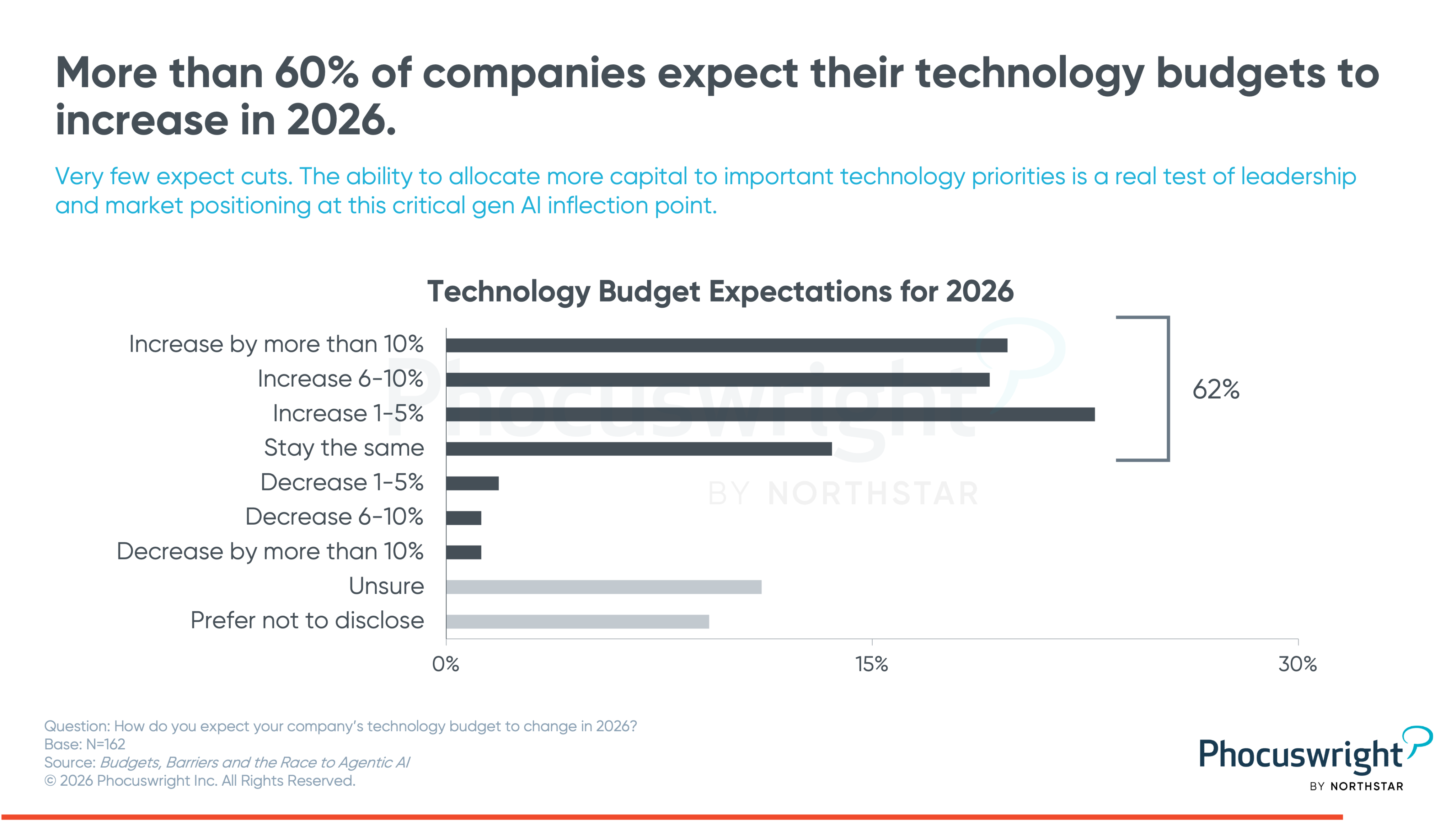
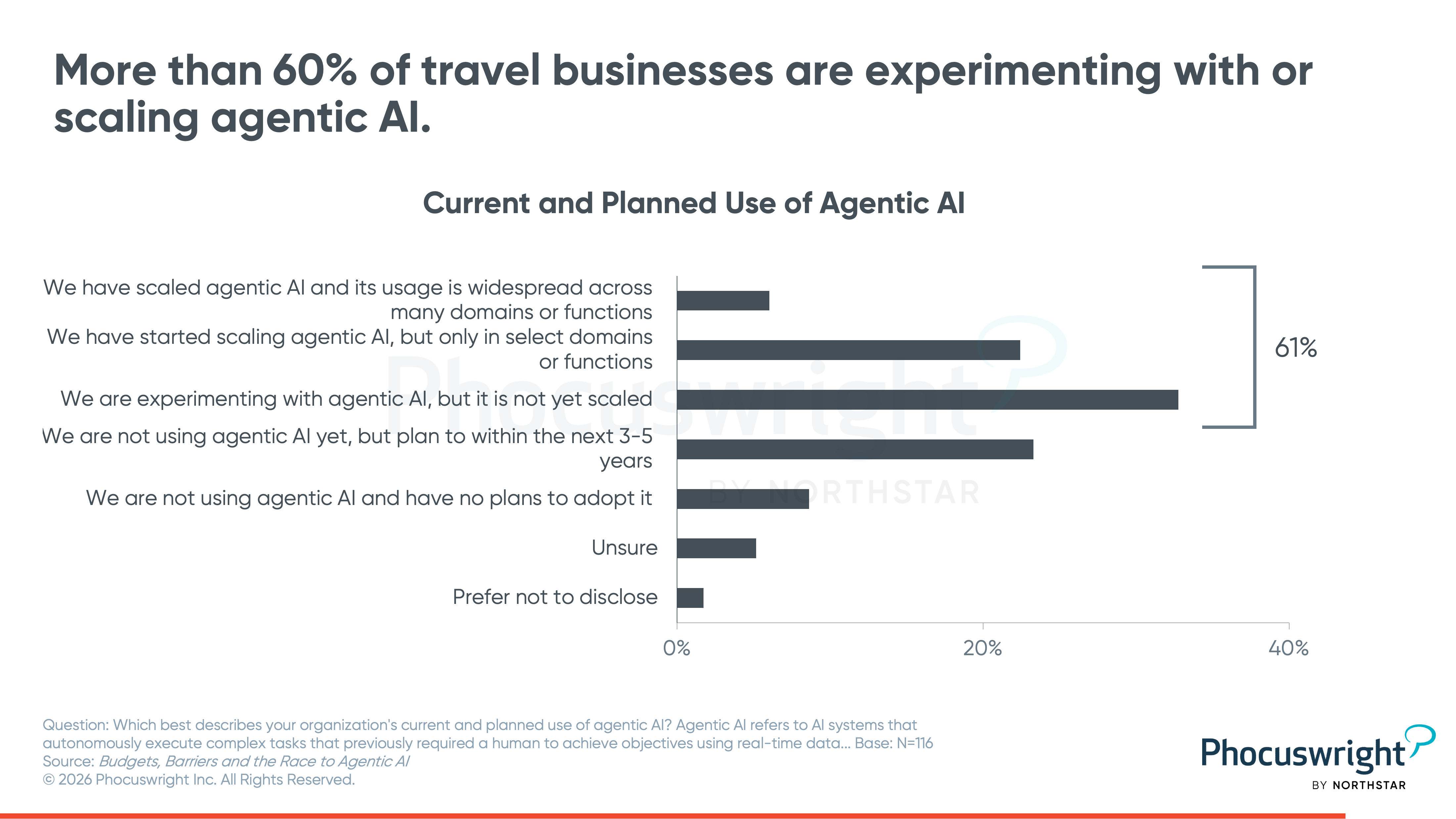
After a year of hype, generative AI has moved firmly into execution mode for the travel industry, reshaping how companies think about technology investment, product development and competitive advantage. Based on a global survey of senior travel executives, this research examines where gen AI and agentic AI are already delivering value, how budgets are shifting to support them, and what’s holding organizations back from scaling. As agentic AI gains traction, the competitive divide is increasingly defined by who can move from experimentation to infrastructure.
Key questions addressed include:
- How are travel companies prioritizing generative and agentic AI within overall technology budgets and roadmaps?
- Where is gen AI already being used internally and in customer-facing products, and what impact is it having so far?
- What are the biggest barriers preventing companies from scaling AI beyond tactical use cases?
- How prepared is the industry for the next phase of agentic AI, including interoperability standards and agent-to-agent commerce?
Free Research Insights articles:
Regional insights
A Market Rewired: Ten Structural Shifts Redefining Asia Pacific Travel


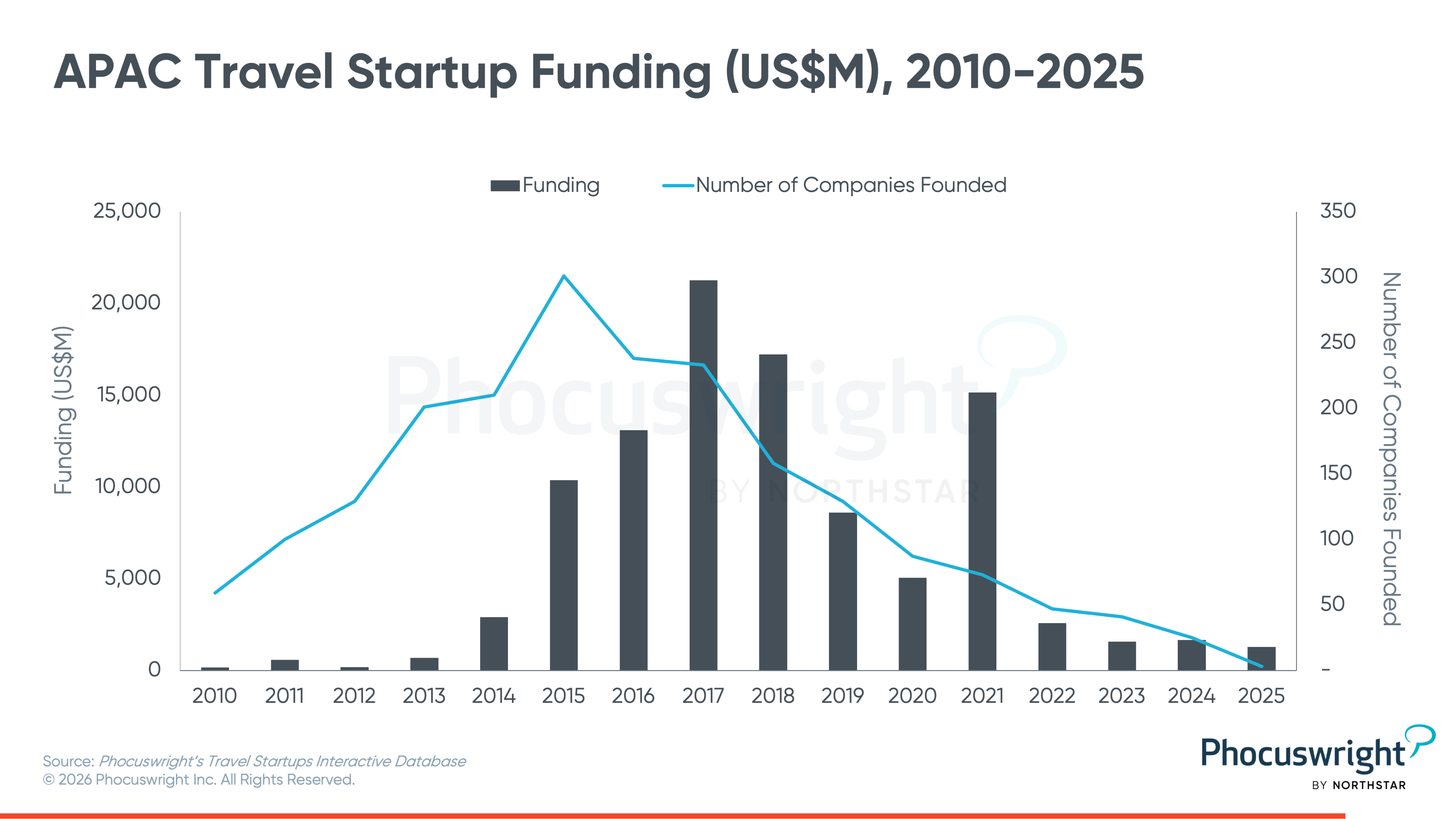
Asia Pacific travel is no longer moving in a single direction. Demographic divergence, geopolitical tension, capital discipline, infrastructure expansion and digital finance are reshaping how demand forms, where travelers go and how value is captured. The region now contains multiple, seemingly polarly opposite bands of consumers. The region simultaneously portrays a mosaic of digitally advanced ecosystems and politically sensitive corridors, where mobility and traveler trends can shift overnight.
Rather than isolating single innovations, A Market Rewired: Ten Structural Shifts Redefining Asia Pacific Travel examines how systems increasingly move in tandem, redistributing urban demand and redefining distribution via cross-industry partnerships. Overall, advantage will accrue not to players chasing nondescript volume, but to those able to adapt to structural change across demographics, capital markets, technology and geopolitics. For travel companies operating in or dependent on Asia Pacific, these shifts are no longer background context. They are core strategic inputs.
Free Research Insights article:
Online Travel Tracker: Vietnam Revealed


Who controls travel in the world’s fastest-moving markets and segments? That’s the question at the heart of the Online Travel Tracker, a new monthly market briefing developed by Phocuswright’s sister brand WiT (Web in Travel), designed to measure the real-time pulse of online travel across key global markets. Each edition highlights a single market or segment, mapping the competitive landscape across channels and connecting macro trends like infrastructure, policy, cultural norms or AI use with the realities of distribution and competition on the ground.
The inaugural edition turns to Vietnam—one of Southeast Asia’s most dynamic travel markets. A powerful mix of infrastructure expansion, domestic mobility and inbound resurgence is colliding with an increasingly competitive digital landscape. Meanwhile, established OTAs, home-grown platforms and super apps are positioning themselves to capture share in a rapidly formalizing online environment, highlighting both opportunity and fragmentation.
Layer in strong consumer appetite for AI-powered planning, embedded payments and immersive tech, and Vietnam becomes more than a growth story—it’s a preview of how digital ecosystems may evolve across emerging markets.
Online Travel Tracker: Indonesia Explored
The second installment of the Online Travel Tracker series explores how structural realities are shaping Indonesia’s evolving travel ecosystem, from infrastructure expansion and aviation competition to government tourism strategy and the rise of powerful domestic conglomerates operating across multiple travel and technology sectors.
Indonesia is one of Southeast Asia’s most dynamic—and complex—travel markets. Spanning thousands of islands and hundreds of languages, the country combines enormous domestic travel demand with a rapidly expanding digital economy. Its travel landscape is taking shape as homegrown platforms, global OTAs and emerging AI-driven tools compete for traveler attention. Domestic demand remains the engine of growth, shaped by digital payments, mobile-first behavior and localized platforms. Concurrently, regulatory uncertainty, environmental pressures and uneven infrastructure development present real constraints—as success in Indonesia’s travel market will depend on companies’ agility in one of the region’s most distinct markets.
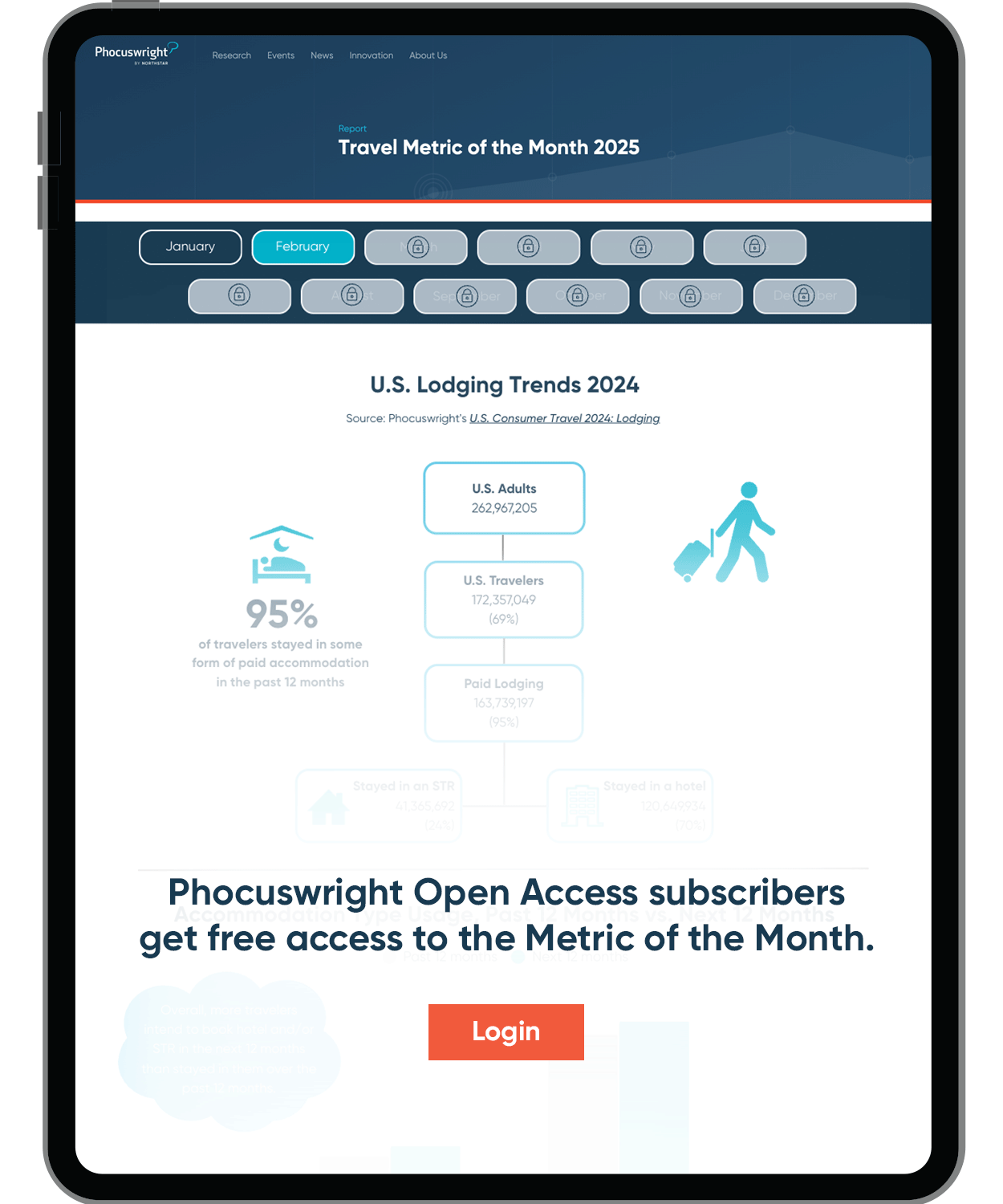
Travel Metric of the Month
Phocuswright’s Travel Metric of the Month 2026 features fresh travel industry research published throughout the year, showcasing key data across our market sizing, consumer research, and tech and innovation practices. Each month, we will publish a new visualization that highlights a significant research trend, finding or data set, along with links to the source publication for a deeper dive.
Metrics of the Month 2025 include:
- January: Luxury Traveler Characteristics
- February: U.S. Travel Agency Trends
- March: Traveler Loyalty: Membership and Usage
- April: Travel Experiences Outlook (NEW!)



More than numbers: This is decision-grade intelligence
Phocal Point: Global Market Sizing
When the market shifts, the most prepared teams aren’t just watching — they’re already adjusting.
That’s why we’ve updated Phocal Point and our Short-Term Rental dashboard with new market sizing, sharper forecasts through 2028, and tools built for professionals who need to move with clarity — not guesswork.
Why It Matters
Every percentage point matters
Whether you're modeling revenue, sizing a market, or evaluating a new opportunity, the difference between a good guess and a precise projection adds up — fast.
Regional nuance matters
What’s happening in Western Europe isn’t what’s happening in the U.S. — and it’s definitely not what’s happening in Asia Pacific. Our updated forecasts reflect this complexity, so you don’t have to flatten it.
Distribution strategy matters
Where bookings happen — and how that’s changing — is just as important as how much they’re worth. Our STR dashboard gives you interactive access to gross bookings data by channel, year, and region. Run your own comparisons. Export your own cuts. Back your strategy with specifics.
Weekly Research Insights
We dig deep to give you the data and trends that drive the travel, tourism and hospitality industry.
Get the latest in travel industry highlights with our free weekly research articles and more. Sign up to get the latest delivered directly to your inbox.
FOR MORE INSIGHTS
See all of Phocuswright's free research insights here.
Sign up to get the latest delivered directly to your inbox.
Open Access Research Subscription
Research is our priority. Our Open Access research subscription puts the world’s most comprehensive library of travel research and data visualization at your fingertips.
Clients have relied on Phocuswright's deep industry knowledge for over 25 years to power great decisions, help justify a pitch, build a strategic plan and elevate any presentation through trusted research and data. When companies and executives reference Phocuswright, they gain the trust of an industry keen on data, trends and analytics.
See the full benefits of an Open Access subscription here.


Contact Us
For any questions you may have, please call or email us at
📱 +1 860 350-4084
📧 [email protected]


About Phocuswright
Events
FAQ
Copyright
Contact Us
Research
News
Privacy & Terms
Press Room
Email Updates
Register for Phocuswright emails about research data, events and more:
A WHOLLY OWNED SUBSIDIARY OF


Copyright © 2025 by Northstar Travel Media LLC. All Rights Reserved. PO Box 760, Sherman, CT 06784 USA | Telephone: +1 201 902-2000
The Phocuswright Conference • Phocuswright Europe • Global Startup Pitch • Travel Tech Fellowship • Phocuswire • Web In Travel • Inntopia • Retail Travel • Hotel Investment